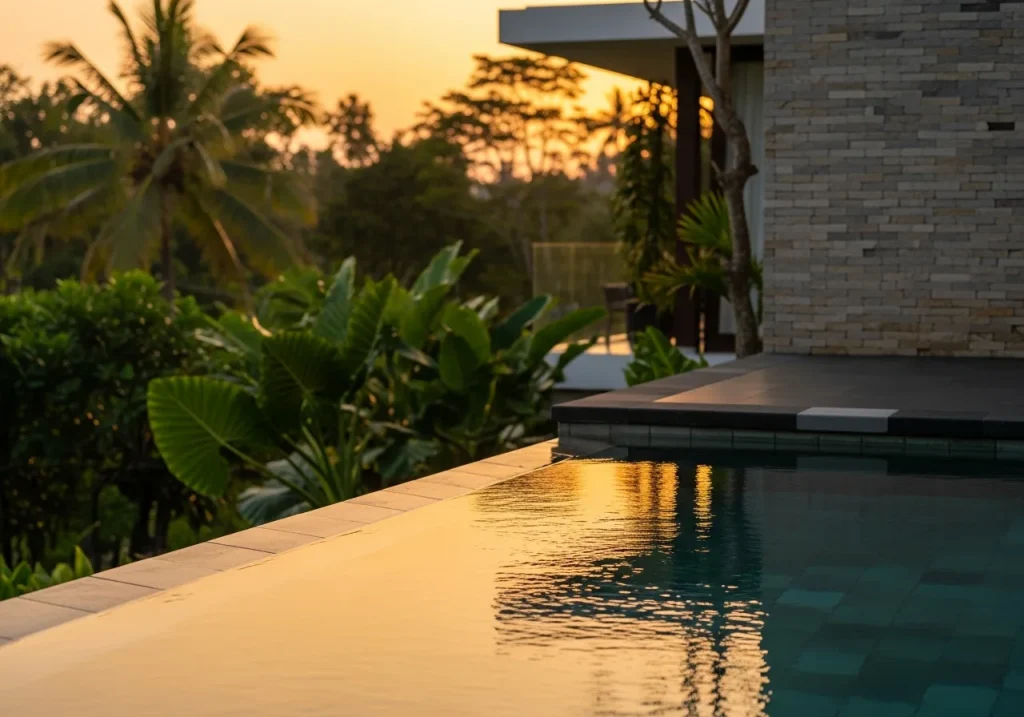
Flores is positioned as a high-growth, frontier tourism and real estate investment market, complementing Bali. It offers faster percentage growth and lower entry prices, supported by government initiatives like the “New Bali” agenda, targeting investors seeking appreciation potential in emerging destinations.
Cost Breakdown: Understanding Flores Investment Distributions and Earnings
Flores Investment provides a detailed cost breakdown and earnings projection for investors considering the high-growth, frontier tourism and real estate market of Flores, Indonesia. This briefing focuses on the 2026–2027 period, contextualising Flores within the broader Indonesian and Balinese investment landscape.
1. Market Size & Growth: Flores vs. Bali (2026-2027 Projections)
Direct, island-specific investment data for Flores is often aggregated at the provincial level (East Nusa Tenggara) or within “super priority” destination programs. Therefore, the investment landscape for 2026–2027 is inferred from national strategies and market analyses.
Indonesia’s Diversification Strategy
- The Indonesian government is actively diversifying tourism investment flows beyond Bali, with explicit focus on eastern islands, including Flores.
- Flores, particularly Labuan Bajo, is branded as part of the “New Balis” / Super Priority Destinations, identified as primary engines for aggressive growth, contrasting with Bali’s mature market profile.
Bali: Capital Preservation & Steady Yields
Bali remains a dominant force in Indonesia’s foreign investment landscape, attracting substantial capital and project volumes.
- 2025 Foreign Investment Realisation: Bali drew IDR 25.60 trillion in PMA (foreign investment) realization.
- 2021–2025 Business Actors & Projects: Bali accounted for 19,262 PMA business actors, approximately 40% of all PMA Business Registration Numbers (NIB) issued nationally, generating 55,458 registered projects.
- 2026 Market Profile: By 2026, Bali is widely characterised as a capital preservation market, offering low-risk, steady yields.
Flores / Labuan Bajo / East Nusa Tenggara (NTT): High-Growth Frontier
Flores and its surrounding eastern islands are emerging as high-growth, frontier markets.
- Emerging Destination Status: Flores, Sumba, Labuan Bajo, and Sumbawa are grouped as emerging destinations, offering higher appreciation potential compared to Bali.
- Government & Private Analyst Perspective: These eastern islands are viewed as “New Balis” with strong infrastructure focus. However, investors should anticipate more regulatory complexities and ESG/zoning constraints, particularly within Labuan Bajo’s conservation zones.
- Government Diversification Agenda: While Bali absorbs the majority of tourism PMA, the central government’s diversification agenda and super-priority destination programmes are directing significant focus and resources towards eastern Indonesia.
2. Investment Vehicles & Structures
Investment in Flores typically involves several structures, each with distinct cost implications and distribution mechanisms.
Direct Property Ownership
Foreigners cannot own freehold land in Indonesia directly. Common structures include:
- Leasehold (Hak Sewa): Long-term leases (e.g., 25-30 years, extendable) are prevalent. Costs include initial lease payment, legal fees, and annual land tax (if stipulated in the agreement). Distributions are direct rental income or capital gains upon lease transfer.
- Right to Build (Hak Guna Bangunan – HGB): This right allows construction and ownership of buildings on state-owned or freehold land for a specified period (e.g., 30 years, extendable). This can be held by Indonesian entities or through a PMA company. Costs include HGB registration fees, legal fees, and property taxes. Earnings derive from property operation or sale.
- PMA Company Structure: Foreign investors often establish a Foreign Investment Company (PMA) to acquire HGB or Right to Use (Hak Pakai) land titles. This involves significant setup costs (company registration, legal, nominee director/commissioner fees) but provides greater control and allows for multiple projects. Distributions are typically repatriated profits after corporate taxes.
Hospitality & Tourism Ventures
These investments often involve joint ventures or direct development of hotels, resorts, or tour operations.
- Development Costs: Land acquisition (via lease or HGB), construction, permits, interior fit-out, and pre-opening expenses.
- Operational Costs: Staff salaries, utilities, marketing, maintenance, and local taxes.
- Revenue Streams: Room nights, F&B sales, tour packages, and ancillary services. Distributions are net profits after all operational and financial obligations.
Land Banking
Acquiring land for future appreciation, particularly in areas designated for infrastructure development or tourism expansion.
- Acquisition Costs: Leasehold payments or HGB acquisition fees, legal due diligence, and transfer taxes.
- Holding Costs: Annual land taxes, security, and potential maintenance.
- Earnings: Primarily through capital appreciation upon sale. This strategy is longer-term and relies on market growth.
3. Cost Breakdown Elements (Approximate Ranges)
The following provides approximate cost ranges for common investment components in Flores. These figures can vary significantly based on location, property type, and project scale.
| Cost Category | Description | Approximate Range (IDR) |
|---|---|---|
| Land Acquisition (Leasehold/HGB) | Initial payment for land rights. | IDR 500,000 – 5,000,000 per sqm (depending on location and term) |
| Legal & Due Diligence Fees | Lawyer fees, land checks, contract drafting. | 2% – 5% of property value |
| Notary Fees | Transaction formalisation, deed registration. | 0.5% – 1.5% of property value |
| Transfer Taxes (BPHTB) | Buyer’s tax on acquisition of land/building rights. | 5% of the Transaction Value minus Non-Taxable Value (NPOPTKP) |
| Permit & Licensing Fees | IMB (building permit), business licenses. | IDR 50,000,000 – 500,000,000+ (project dependent) |
| Construction Costs | Building materials, labour, contractor fees. | IDR 5,000,000 – 15,000,000 per sqm (for standard villas/buildings) |
| PMA Company Setup | Registration, legal, nominee fees. | IDR 100,000,000 – 300,000,000+ |
| Annual Property Tax (PBB) | Annual land and building tax. | 0.1% – 0.2% of government assessed value |
| Management Fees (for rentals) | Property management services. | 15% – 25% of gross rental income |
| Sales Commission (upon exit) | Real estate agent fees. | 2% – 5% of sale price |
4. Understanding Distributions and Earnings
Earnings and distributions are contingent on the investment type and operational structure.
Rental Income (Hospitality/Residential)
For income-generating properties, distributions are typically derived from rental revenue after deducting operational costs, management fees, and relevant taxes.
- Gross Rental Yields: In emerging Flores markets, gross rental yields can be attractive, though net yields depend heavily on efficient operations and occupancy rates.
- Distribution Frequency: Monthly or quarterly, as per management agreements.
Capital Appreciation (Land & Property)
This is a primary driver for investment in frontier markets like Flores.
- Long-term Holding Strategy: Investors acquire assets with the expectation of significant value increase over 5-10 years.
- Exit Strategy: Earnings are realised upon the sale of the asset. Capital gains tax applies to the seller (PPH Final) at 2.5% of the gross sale value for land and/or building.
PMA Company Profit Repatriation
For investments structured through a PMA company, profits can be repatriated after corporate income tax (22% as of 2022) and any applicable withholding taxes on dividends.
2027 Note
By 2027, the ongoing infrastructure developments in Flores, particularly around Labuan Bajo, are projected to have significantly enhanced accessibility and tourist footfall. This will likely solidify property values and rental yields in prime locations, making it a critical year for assessing initial investment performance against development milestones.
5. Regulatory & Tax Considerations
Understanding the regulatory and tax framework is crucial for accurate cost breakdown and earnings projections.
Indonesian Tax System
- Corporate Income Tax: Currently 22% for PMA companies.
- Withholding Tax on Dividends: Varies based on Double Taxation Avoidance Agreements (DTAAs) but is generally 20% for non-treaty countries.
- VAT (Value Added Tax): Standard rate of 11% on goods and services, applicable to construction, certain rentals, and operational services.
- Land & Building Tax (PBB): Annual tax based on the assessed value of land and buildings.
- BPHTB (Land and Building Rights Acquisition Duty): 5% of the acquisition value above the Non-Taxable Value.
- Final Income Tax on Property Sales (PPH Final): 2.5% of the gross sale value for the seller.
Regulatory Landscape
The “New Bali” agenda, while promoting investment, also brings increased scrutiny, particularly in conservation zones within Labuan Bajo. ESG (Environmental, Social, Governance) factors and zoning regulations are increasingly stringent, requiring thorough due diligence and compliance.
- Spatial Planning (RTRW): Adherence to local and provincial spatial plans is mandatory.
- Environmental Impact Assessments (AMDAL): Required for larger developments.
- Building Permits (IMB/PBG): Essential for all construction.
Conclusion
Flores presents a compelling high-growth, frontier investment opportunity, complementary to Bali’s mature market. Understanding the detailed cost breakdown, potential earnings mechanisms, and the regulatory environment is paramount for successful investment. While direct island-specific data can be limited, the strong government backing and aggressive growth projections position Flores as a market with significant appreciation potential for discerning investors.
For a bespoke analysis of investment opportunities in Flores and to understand how these cost structures apply to your specific objectives, book an investment consultation on WhatsApp with Flores Investment.
Continue reading: How to Buy Land in Labuan Bajo 2027: A Step-by-Step Investment Guide · How-To: Buying Fractional Shares on the Flores Brokerage Path · Investment Opportunities